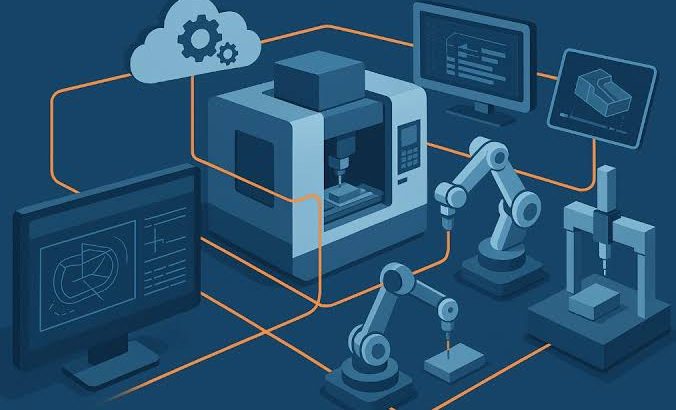
Precision manufacturing depends on accuracy, repeatability, and efficient coordination between design and production. When engineering and machining teams rely on disconnected systems, even small changes can create delays, programming errors, or costly rework. CAD CAM automation solutions help manufacturers connect product design with CNC programming, creating a smoother path from digital model to finished component.
By reducing manual tasks and improving data consistency, businesses can increase productivity while maintaining strict quality standards.
Connect Design Data with CNC Programming
CAD software allows engineers to create detailed 3D models, assemblies, and manufacturing drawings. CAM software uses this information to develop toolpaths and CNC programs for machining operations.
An integrated CAD CAM environment removes many of the file conversion steps found in traditional workflows. Manufacturing teams can work directly with the approved design model, reducing the risk of misinterpreting dimensions or using outdated information.
Respond Faster to Engineering Changes
Design revisions are common during product development. A feature may need to be resized, repositioned, or removed before production begins.
With associative CAD CAM software, machining operations remain linked to the design geometry. When the model changes, programmers can identify affected toolpaths and update them without rebuilding the entire CNC program. This saves time and supports better control over revisions.
Automate Repetitive Manufacturing Tasks
Many machining jobs include familiar features such as holes, pockets, slots, and bosses. Programming each feature manually can consume valuable time and produce inconsistent results.
CAD CAM automation tools can recognize machinable features and apply predefined operations based on approved manufacturing standards. These rules may include tool selection, cutting parameters, machining sequences, and finishing requirements.
Standardize Proven Machining Methods
Automation helps experienced programmers capture and reuse successful manufacturing knowledge. This allows teams to apply consistent processes across similar parts and reduces dependence on individual programming habits.
It also gives skilled employees more time to improve cycle times, manage complex work, and address production priorities.
Improve Accuracy and Production Efficiency
Digital verification tools allow programmers to review tool movement before machining begins. Potential collisions, unnecessary movements, and unsuitable toolpaths can be identified in the virtual environment.
This improves machine utilization, protects equipment, and reduces the likelihood of scrapped materials. Reliable automation also helps businesses produce consistent results across repeat orders.
A professional SolidWorks reseller can help manufacturers select suitable CAD, CAM, simulation, and data management solutions. The right partner should also provide implementation support, user training, licensing guidance, and technical assistance.
The SolidWorks price depends on the chosen package, license model, number of users, and additional applications required. Manufacturers should request a tailored quotation based on their design and production needs rather than relying on general pricing estimates.
Build a More Competitive Manufacturing Operation
CAD CAM automation solutions give precision manufacturers greater control over design changes, CNC programming, and production data. By connecting engineering and machining processes, companies can shorten lead times, reduce errors, and improve repeatability.
SEACAD Technologies supports manufacturers with professional design, manufacturing, implementation, training, and technical solutions. With the right system in place, businesses can create a more efficient workflow and strengthen their ability to deliver accurate, high-quality components.