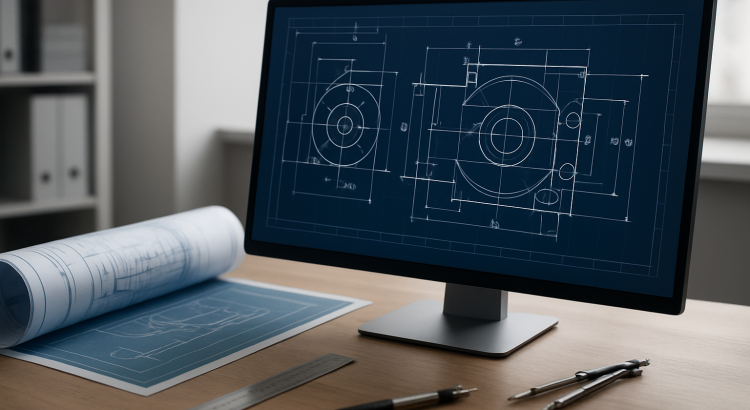
Manufacturing industries continue to face increasing demands for faster production, improved product quality, and reduced operational costs. To remain competitive, businesses need smarter workflows that connect product design directly to manufacturing processes. CAD/CAM integration helps companies achieve this by streamlining communication between engineering and production teams while improving overall manufacturing efficiency.
Understanding CAD/CAM Integration
CAD, or Computer-Aided Design, focuses on creating detailed digital product models. CAM, or Computer-Aided Manufacturing, converts those designs into machine instructions for production equipment. When integrated, these systems allow manufacturers to move seamlessly from product design to actual production.
Eliminating Manual Data Transfers
Traditional workflows often require engineers to manually recreate designs for machining processes, increasing the risk of errors and delays. CAD/CAM integration removes this gap by allowing manufacturing data to flow directly from the design environment to production equipment.
Improving Workflow Accuracy
Integrated systems reduce inconsistencies between design files and machine programming. Since manufacturing instructions are generated directly from approved CAD models, businesses can minimize production mistakes and improve product consistency.
Faster Product Development and Production
One of the biggest advantages of CAD/CAM integration is the ability to accelerate the entire manufacturing process.
Reduced Programming Time
Integrated solutions automate many machining and toolpath generation tasks. This allows production teams to prepare manufacturing operations more quickly while reducing repetitive manual work.
Shorter Lead Times
With faster transitions between design and manufacturing, businesses can complete projects more efficiently. Shorter production cycles help companies respond quickly to customer demands and changing market conditions.
Better Collaboration Across Departments
Successful manufacturing depends on strong coordination between engineering, design, and production teams.
Real-Time Design Updates
CAD/CAM integration ensures that manufacturing teams always work with the latest approved designs. Any modifications made during development can automatically update production instructions, helping avoid communication errors.
Improved Production Planning
Integrated systems also provide better visibility into manufacturing processes. Teams can evaluate tooling requirements, machine compatibility, and production feasibility earlier in the development stage.
Businesses planning to upgrade their engineering workflows often look for reliable solutions when they decide to buy SolidWorks software. Choosing an integrated CAD/CAM platform helps organizations improve efficiency while supporting long-term manufacturing growth.
At the same time, evaluating the overall SolidWorks price is important for businesses considering software investments. Understanding licensing, support, and available features allows companies to select solutions that align with both operational needs and budget goals.
Supporting Smarter Manufacturing Operations
CAD/CAM integration plays an important role in modern manufacturing by improving productivity, reducing errors, and strengthening collaboration across departments. By connecting design and production processes into one efficient workflow, businesses can deliver higher-quality products while maintaining greater operational control. Companies that invest in integrated engineering solutions are better positioned to improve efficiency and stay competitive in today’s fast-moving manufacturing industry.