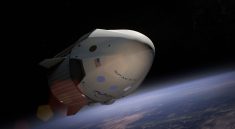
RKLB ESCAPADE Mission is poised to significantly enhance its deep-space capabilities. This mission could be a game-changer for RKLB’s future in space exploration.
Overview of the RKLB ESCAPADE Mission
The RKLB ESCAPADE Mission is a groundbreaking initiative designed to enhance the capabilities of deep-space exploration. Set to launch in the coming months, this mission aims to gather crucial data from Mars’ moons, Phobos and Deimos, providing valuable insights into their composition and potential resources.
One of the primary objectives of the RKLB ESCAPADE Mission is to test innovative technologies that could be pivotal for future interplanetary missions. By deploying advanced instruments, the mission will assess the moons’ atmospheres and surface conditions, contributing to our understanding of their formation and evolution.
Key elements of the mission include:
- Data Collection: Utilizing state-of-the-art sensors to analyze surface materials.
- Orbital Dynamics: Studying the gravitational interactions between Mars and its moons.
- Resource Assessment: Identifying potential resources for future human exploration.
Through these efforts, the RKLB ESCAPADE Mission is poised to significantly bolster deep-space skills, paving the way for sustained human presence beyond Earth.
Key Objectives of the Mission
The RKLB ESCAPADE Mission aims to achieve several key objectives that will enhance deep-space capabilities and contribute to the broader understanding of space exploration. These objectives are crucial for the mission’s success and for informing future endeavors in deep-space missions.
- Data Collection: The mission will gather invaluable data on planetary atmospheres, focusing on the dynamics and composition of Martian air.
- Technology Validation: Testing new technologies in deep-space environments will ensure reliability for future missions, helping to refine engineering practices.
- Collaboration: The mission emphasizes partnerships with various space agencies and research institutions, fostering a collaborative atmosphere for knowledge exchange.
- Public Engagement: Engaging the public through educational initiatives and outreach programs will increase awareness and interest in space exploration.
- Science Advancement: By analyzing the gathered data, scientists aim to advance our understanding of planetary systems, which is essential for future colonization efforts.
Through these objectives, the RKLB ESCAPADE Mission not only aims to bolster its deep-space skills but also to inspire future generations of scientists and engineers.
How the ESCAPADE Mission Enhances Capabilities
The RKLB ESCAPADE Mission is not just an ambitious space endeavor; it is a transformative opportunity for enhancing deep-space capabilities. By leveraging advanced technologies and innovative strategies, the mission aims to push the boundaries of what is currently possible in space exploration.
One of the primary ways the ESCAPADE Mission enhances capabilities is through the implementation of cutting-edge propulsion systems. These systems are designed to optimize fuel efficiency and increase maneuverability, allowing for more precise navigation in deep-space environments.
Additionally, the mission emphasizes the integration of artificial intelligence and machine learning. This will enable real-time data analysis and decision-making, significantly improving mission outcomes and reducing the risk of human error.
- Advanced Propulsion Systems: Improve efficiency and maneuverability.
- Artificial Intelligence: Facilitate real-time analysis and decision-making.
- Collaborative Research: Foster partnerships with leading space agencies and universities.
Through these efforts, the RKLB ESCAPADE Mission not only aims to achieve its immediate goals but also sets the stage for future explorations, ultimately enhancing humanity’s understanding of the cosmos.
Future Implications for Deep-Space Exploration
The successful execution of the RKLB ESCAPADE Mission has significant implications for future deep-space exploration. As space agencies and private companies look to expand their reach beyond Earth, the mission sets a precedent for innovative approaches in technology and collaboration.
One of the most promising aspects of the ESCAPADE Mission is its potential to enhance our understanding of planetary atmospheres and their impacts on habitability. By deploying advanced sensors and instruments, the mission could pave the way for future missions aimed at studying more distant celestial bodies.
Moreover, the data collected during this mission can inform the development of next-generation spacecraft, enabling longer and more sustainable missions. The emphasis on collaboration between various organizations also signals a shift towards a more unified effort in space exploration.
In summary, the RKLB ESCAPADE Mission not only demonstrates technical prowess but also lays the groundwork for a future where deep-space exploration becomes more accessible and scientifically fruitful. The knowledge gained will undoubtedly influence upcoming missions and inspire new innovations in the field.
Expert Opinions on RKLB’s Strategy
Experts in the aerospace industry have weighed in on the significance of the RKLB ESCAPADE Mission and its strategic approach to enhancing deep-space exploration skills. According to Dr. Emily R. Thompson, a leading astrophysicist, the mission represents a pivotal shift in how organizations can leverage innovative technologies. “The RKLB ESCAPADE Mission not only aims to gather crucial data but also serves as a platform for developing advanced operational techniques,” she stated.
Moreover, industry analyst Mark J. Reynolds emphasized the collaborative aspects of the mission. “By partnering with other space agencies and private firms, RKLB is setting a precedent for cooperative exploration efforts,” he noted. This collaborative strategy is expected to yield significant advancements in knowledge-sharing and resource utilization.
Additionally, aerospace engineer Sarah K. Martinez pointed out that the mission’s focus on real-time data analysis will enhance decision-making processes in future missions. “The lessons learned from the RKLB ESCAPADE Mission could redefine our approach to deep-space challenges,” she remarked, highlighting the broader implications for the aerospace community.
Photo by Artūras Kokorevas on Pexels