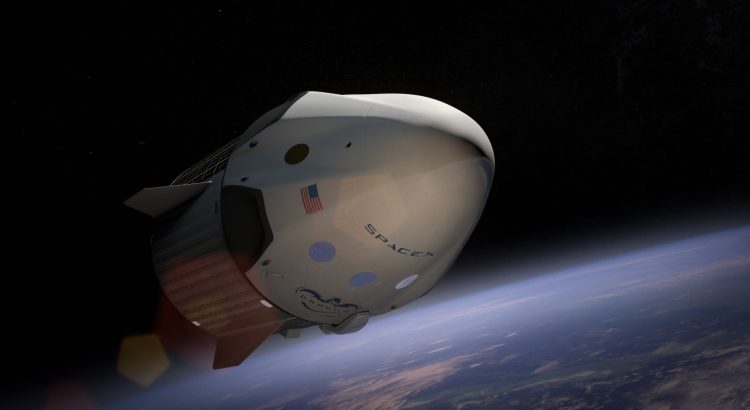
Gaganyaan mission tests have successfully demonstrated crucial crew module-service module separation, marking a significant milestone for India’s space ambitions.
Overview of Gaganyaan Mission
The Gaganyaan mission, spearheaded by the Indian Space Research Organisation (ISRO), marks a significant leap in India’s space exploration efforts. This ambitious project aims to send Indian astronauts into low Earth orbit, showcasing India’s growing capabilities in human spaceflight.
Recently, ISRO completed critical tests on the crew module and service module separation, a crucial step in ensuring the safety and success of the Gaganyaan mission. These tests simulate the conditions astronauts will face during the actual mission, allowing engineers to validate the spacecraft’s systems.
Key aspects of the Gaganyaan mission include:
- Human Spaceflight: The mission intends to carry a crew of Indian astronauts.
- Technological Advancements: Innovations in spacecraft design and safety protocols.
- International Collaboration: Partnerships with global space agencies to enhance mission capabilities.
With the successful completion of these tests, the Gaganyaan mission tests continue to pave the way for safe space travel and inspire future generations of scientists and explorers.
Importance of Crew Module Separation
The successful completion of the crew module separation tests is a crucial milestone for the Gaganyaan mission. This phase of testing ensures that the crew module can safely detach from the service module during critical stages of the mission, particularly during the return journey to Earth.
The importance of crew module separation lies in several key factors:
- Safety: Ensuring a reliable separation mechanism is vital for the safety of astronauts aboard the crew module.
- Mission Success: A successful separation is essential for the mission’s overall success, impacting the re-entry and landing phases.
- Technological Advancement: These tests showcase ISRO’s commitment to advancing space travel technology, particularly in crewed missions.
- International Standards: Meeting global standards for safety and operational reliability enhances India’s reputation in space exploration.
As the Gaganyaan mission progresses, these crew module separation tests highlight the meticulous planning and execution required for safe space travel.
Recent ISRO Achievements
The Indian Space Research Organisation (ISRO) has recently achieved significant milestones in its Gaganyaan mission as part of its rigorous testing phase. These tests are crucial for ensuring the safety and reliability of crewed space travel.
Among the notable accomplishments, ISRO has successfully completed the crew module-service module separation tests. This critical step simulates the conditions that the crew will experience during actual spaceflight, ensuring that all systems function as intended.
The Gaganyaan mission aims to send Indian astronauts into low Earth orbit, marking a significant leap for India’s capabilities in human spaceflight. The successful completion of these separation tests demonstrates ISRO’s commitment to thorough preparation and safety in space exploration.
Key achievements include:
- Successful separation of modules: This ensures the crew module can operate independently during the mission.
- Enhanced safety protocols: These tests validate the safety measures for astronauts.
- Progress in technology: Advancements made in spacecraft design and functionality.
As the Gaganyaan mission tests continue, ISRO remains dedicated to paving the way for safe and successful space travel.
Future of Indian Space Travel
The future of Indian space travel looks promising as the Gaganyaan mission tests pave the way for advancements in human spaceflight. With the successful completion of the crew module-service module separation tests, ISRO is one step closer to launching its inaugural crewed mission. This achievement not only showcases India’s growing capabilities in aerospace technology but also strengthens its position in the global space community.
As the Gaganyaan mission progresses, several key areas are being explored to enhance safety and efficiency in space travel:
- Technological Innovation: Development of advanced systems that ensure crew safety during missions.
- Collaboration: Partnerships with international space agencies to share expertise and resources.
- Public Engagement: Increasing interest and involvement of the younger generation in space science and exploration.
With each successful test, the Gaganyaan mission tests are laying the groundwork for a new era of space exploration in India, potentially leading to manned missions to the Moon and beyond.
Safety Measures in Space Missions
As part of the Gaganyaan mission tests, ensuring the safety of astronauts during space travel is of paramount importance. The Indian Space Research Organisation (ISRO) has implemented a series of rigorous safety measures designed to protect crew members throughout their journey.
Key safety measures include:
- Robust Testing Protocols: Extensive simulations and tests are conducted to evaluate the performance of the spacecraft under various conditions.
- Advanced Life Support Systems: These systems are designed to provide essential life support, including oxygen supply and waste management, for crew members during the mission.
- Emergency Recovery Procedures: In the event of an anomaly, well-defined procedures are in place to ensure a safe return to Earth.
- Continuous Monitoring: Real-time monitoring of the spacecraft’s systems allows for immediate action to be taken if any issues arise.
These measures underscore ISRO’s commitment to the Gaganyaan mission tests, paving the way for not only safe but also successful space exploration for India.
The Gaganyaan mission tests have demonstrated crucial technologies for ensuring astronaut safety during space travel. With each phase of the Gaganyaan mission tests, scientists gain valuable insights into the challenges of human spaceflight.
Photo by SpaceX on Pexels